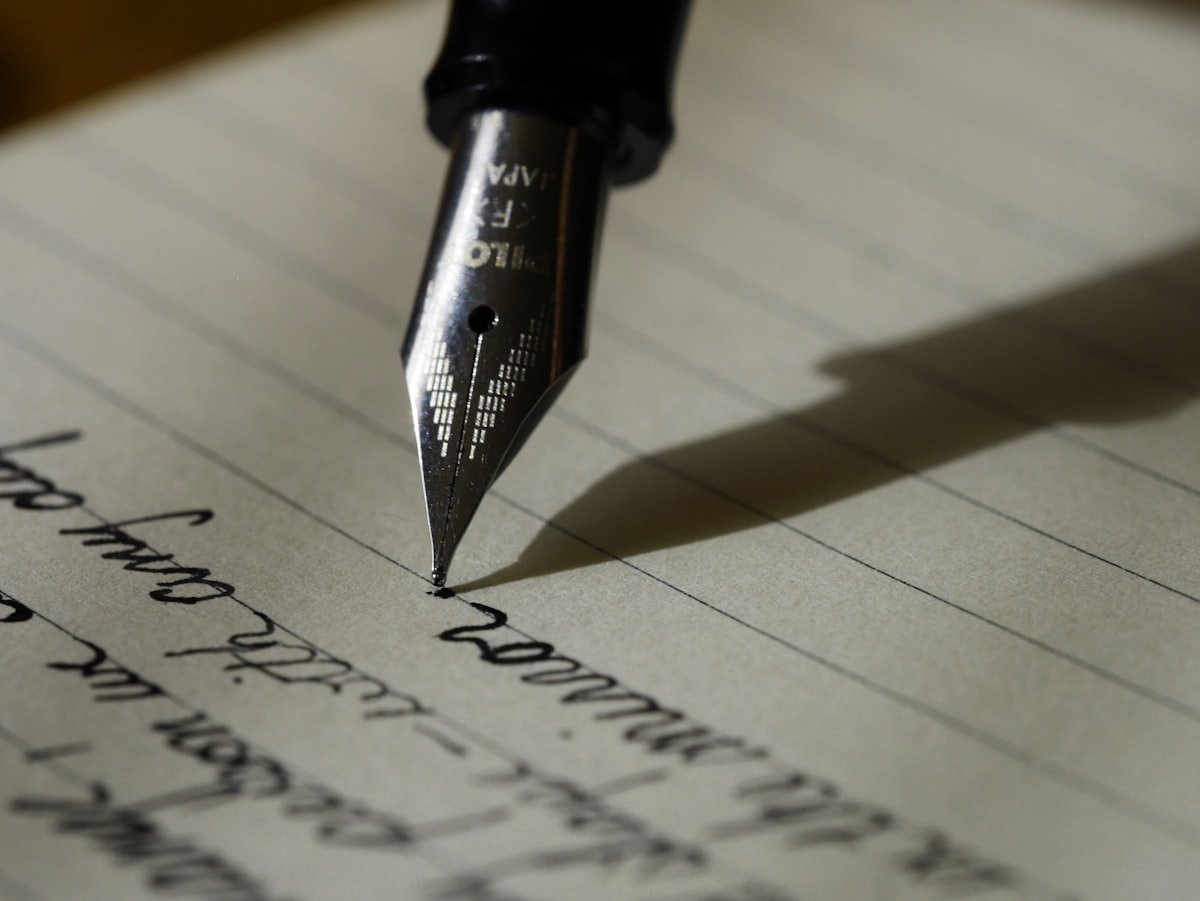
When was the last time you received a handwritten letter? Not a birthday card, not a thank-you note — a proper letter, with multiple pages, written with the evident intention of communicating something real? For most people reading this, the answer will be measured in years, if not decades. The handwritten letter has become, in the span of a single generation, an almost extinct form of communication.
This is a genuinely significant cultural loss. Letters are not simply an inefficient means of transmitting information that has been superseded by better technology. They are a distinct form of thought — a way of composing the self, addressing another person with full attention, and creating something that can be held, re-read and kept. Their disappearance from daily life has changed not just how we communicate but how we think about communication.
What Letters Actually Were
The letter, at its best, was a kind of thinking in public. The greatest letter writers — Jane Austen, Keats, Van Gogh, Virginia Woolf — used the form not just to convey information but to discover what they thought. The act of writing, slowly and by hand, to a specific person who would read every word days later, created a different quality of attention from any contemporary form of communication. You couldn't send a first draft. You couldn't unsend. You had to mean what you wrote.
"The best letters are not documents — they're conversations conducted at the speed of thought, preserved at the speed of post."
The New Letter Writers
And yet letters are not quite dead. In recent years, something unexpected has been happening: a quiet revival of letter writing among people who are old enough to remember it and young enough to find it countercultural. The Letter Exchange — a UK organisation that matches people who want to write letters — has seen membership grow steadily. Pen pal websites and apps, which had an anachronistic quality until recently, are finding new audiences among people deliberately seeking the experience of slow, considered correspondence.
Prison pen pal programmes have long maintained the letter as a form: for prisoners, a handwritten letter from the outside carries a weight that an email never could. The Letters of Note website and its associated books, which publish historically significant correspondence, has attracted millions of readers fascinated by what letters reveal about their writers that other forms cannot.
Why Handwriting Matters
There is neuroscience behind the feeling that handwriting is different from typing. Research consistently shows that note-taking by hand produces better comprehension and retention than typing, even when typing is faster. The slower pace of handwriting forces a kind of processing — summarising, paraphrasing, selecting — that word-for-word transcription bypasses. The physical act of forming letters by hand also activates different neural pathways than keyboarding, with implications for memory, creativity and the emotional quality of the writing.
When we write a letter by hand, we are making a series of small decisions — about what to say, how to say it, what order to put things in — at a pace that allows for genuine reflection. We are also communicating something about the effort involved: a handwritten letter is a gift of time, and the recipient knows it.
Starting Again
For those who want to revive the practice, the barriers are surprisingly low. You need only paper, a pen, a stamp and someone to write to. The first letter is the hardest — there is a temptation to be formal, to produce something worthy of the occasion. The most useful thing to remember is that the best letters are not performative. They are conversational: the things you would say if you were sitting together, written down and sent across the distance.
If you begin, you will likely find what regular correspondents describe: that writing letters changes the way you pay attention to your own life. You start noticing things that are worth writing down. You find yourself looking for the specific, the observed, the felt — because those are the things that make a letter worth reading. In this sense, the act of writing letters is not just a way of communicating. It is a way of living more attentively.