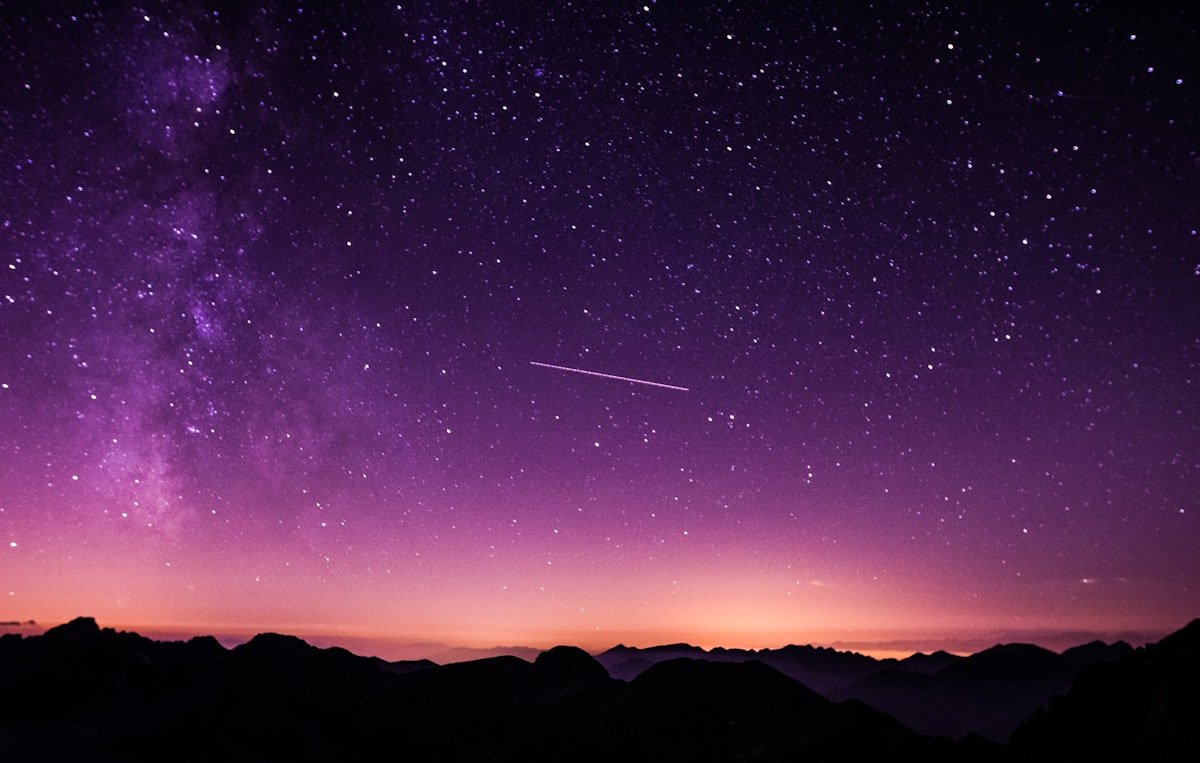
The astronomer royal of the seventeenth century could look up from London and see a sky blazing with stars. Today, from the same city, on a clear night, you might see thirty or forty stars — the brightest ones only, struggling through a permanent amber haze. Two-thirds of Britons have never seen the Milky Way from their home. For children growing up in cities, the idea that the night sky could be full of stars is essentially theoretical — something that happens on camping trips, or in photographs, but not in ordinary life.
Light pollution is one of the most profound and underappreciated environmental changes of the twentieth century. The artificial brightening of the night sky has happened so gradually, and has been so thoroughly normalised, that most people regard it as simply how things are — an inevitable consequence of civilisation. But it has consequences that extend far beyond the inconvenience of not being able to see stars. It is affecting the behaviour, ecology and population dynamics of species across the natural world, and it may be affecting human health in ways we are only beginning to understand.
The Scale of the Problem
Britain is one of the most light-polluted countries in the world. Satellite measurements show that artificial light at night is increasing at a rate of roughly two per cent per year globally, and faster in many developed countries. In the UK, only a small fraction of land — principally in northern Scotland, parts of Wales, and some upland areas of England — experiences genuinely dark skies. The majority of the population lives under skies bright enough to wash out all but the most prominent stars.
"We have built a civilisation that cannot see its own sky. That is a stranger and more significant loss than most of us have stopped to notice."
The Ecological Consequences
The most well-documented ecological effects of light pollution involve disruption of circadian rhythms — the internal biological clocks that regulate the behaviour and physiology of virtually all living organisms. Artificial light at night confuses these systems in ways that have serious consequences.
- Migratory birds use stars for navigation; light pollution disorients them, leading to collisions with illuminated buildings and disrupted migration routes
- Insects, particularly moths and beetles, are attracted to artificial lights and die in vast numbers — contributing to the catastrophic decline in insect populations documented across Britain
- Sea turtles (relevant to UK waters) orient by moonlight; artificial beach lighting causes hatchlings to move away from the sea
- Nocturnal mammals, including hedgehogs and bats, have reduced foraging ranges around illuminated areas
- Trees in urban areas, exposed to artificial light, fail to enter dormancy at the correct time, making them more vulnerable to frost damage
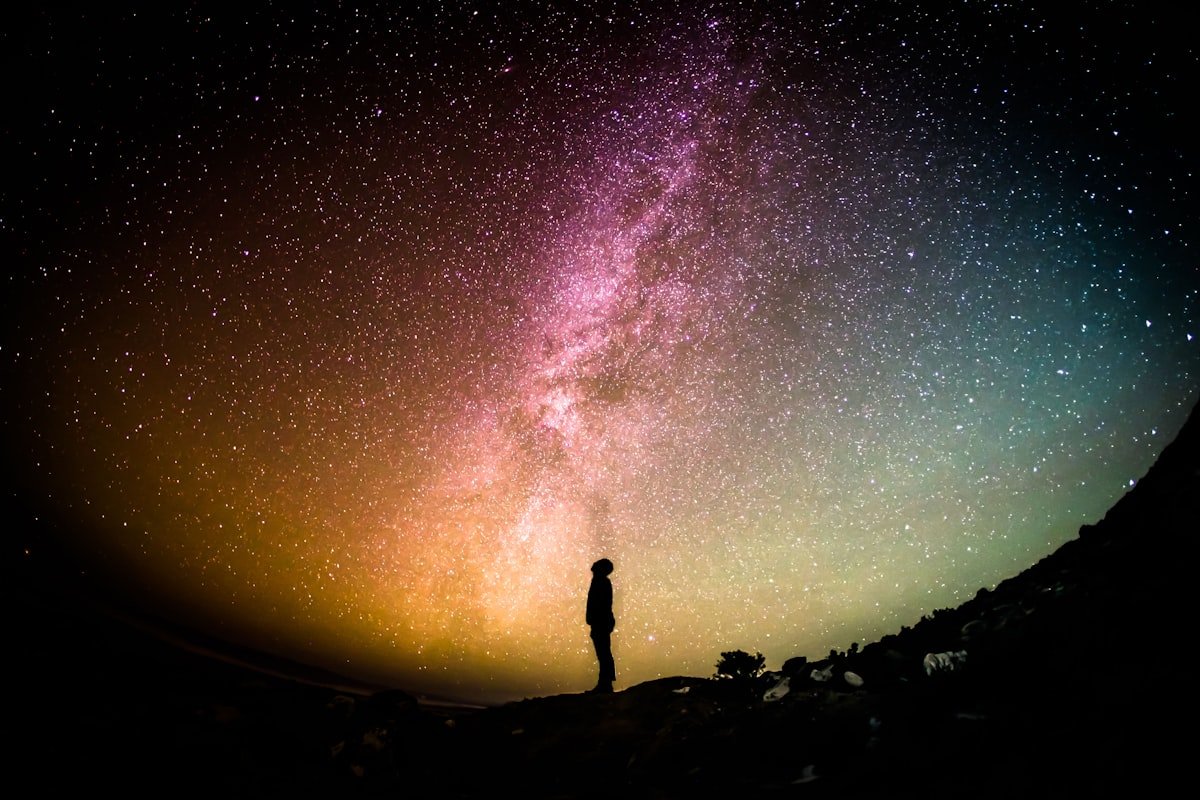
The Dark Sky Movement
Britain has fourteen designated Dark Sky Discovery Sites, and several internationally recognised Dark Sky Parks and Reserves — including the Galloway Forest Dark Sky Park, the Exmoor Dark Sky Reserve and the Brecon Beacons International Dark Sky Reserve. These areas are protected from further light pollution by planning policies, and they attract growing numbers of visitors who travel specifically to see the night sky.
The Dark Sky movement has achieved several significant policy successes. The introduction of warm-spectrum, directional LED street lighting — which produces far less upward sky glow than older sodium lamps — has been adopted by several progressive local authorities. Part-night lighting schemes, in which street lights are dimmed or switched off during the quietest hours, are now operating in dozens of councils across Britain.
What Can Be Done?
Light pollution is unusual among environmental problems in that it is almost entirely reversible. If you turn the lights off, the darkness returns immediately. This makes it one of the few cases in which environmental improvement can happen at extraordinary speed, with relatively low cost. The technology to dramatically reduce light pollution — better-designed fixtures, motion sensors, timers, warm-spectrum LEDs, reduced upward light — already exists and is often cheaper than the older alternatives.
Individual action also matters. Drawing curtains at night, replacing outdoor lights with sensor-activated alternatives, switching off unnecessary interior lighting: these are small actions that, scaled across millions of households, would make a measurable difference. The night sky is not gone. In most of Britain, it is merely hidden — and hiding it is a choice, not a necessity. Choosing differently requires only that we decide the darkness matters.